More than 2.2 billion books are printed globally each year, according to data reported by the International Publishers Association, and many of them eventually sit untouched on shelves. Travel, on the other hand, keeps moving. Pair the two, and something beautiful happens. Stories begin to travel with us.
A few summers ago, I found myself dragging a paperback across three countries. By the end of the trip, it was swollen from beach air and folded at every corner. I didn’t want to toss it in a bin. I wanted it to continue its journey. That is when I started looking for ways to Recycle Old Books responsibly while on the road. Turns out, book recycling can be part of the adventure itself.
The Rise of the Traveling Book
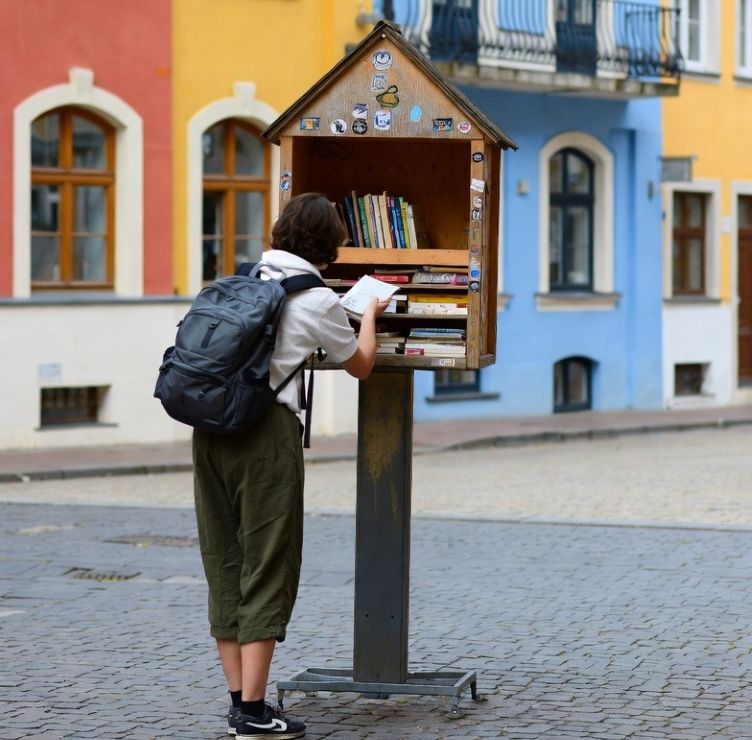
Travelers have been leaving books behind for decades. Hostel culture studies discussed by Hostelworld highlight how book exchange shelves are among the most common shared amenities in backpacker hostels worldwide. In cities like Berlin and Bangkok, informal swap corners are almost expected. I once picked up a mystery in Lisbon with three different names scribbled inside the cover. Each reader had added the date and the city where they finished it. It felt like joining a quiet club.
This kind of exchange turns reading into a shared ritual. You leave a story. You take a story. You pass along a bit of yourself.
Community Libraries Around the World
One of my favorite discoveries was a small street library near Sydney. It reminded me of the Little Free Library movement, which began in Wisconsin in 2009. According to Little Free Library, the nonprofit now supports more than 150,000 registered book-sharing boxes across over 100 countries. These small book boxes appear in neighborhoods from Toronto to Tokyo. Travelers can drop off a finished novel and pick up a local recommendation.
Some cities have gone further. Iceland, for example, is famous for its strong reading culture. According to Statistics Iceland, the country has one of the highest per capita book publication rates in the world. In Reykjavík, independent bookstores and reading spaces welcome visitors to browse and donate, depending on store policies. Gently used English-language books often serve fellow travelers well.
It feels simple, yet meaningful. Instead of weighing down your luggage, you lighten it. You give the book a second life.
Book Cafes and Cultural Corners
Book cafes are a gift to wandering readers. In Paris, iconic English-language bookstores like Shakespeare and Company have long encouraged literary exchange among travelers. Cultural reporting by The New York Times has highlighted how such spaces act as community hubs for readers from around the world. In Seoul, independent book cafes frequently host readings and discussions that welcome locals and visitors alike.
I once traded a travel memoir for a slim novel in a cafe in Chiang Mai. The barista grinned and said, “Stories are our best souvenirs.” I still think about that line.
These exchanges spark conversations. You ask what locals are reading. You hear about authors you would never find back home. Literature becomes a bridge.
Turning Recycling Into a Travel Ritual
Sustainable travel is gaining attention globally. According to the United Nations World Tourism Organization, travelers are increasingly seeking environmentally responsible ways to explore new destinations. Many travelers, especially students and lifelong learners, look for ways to keep growing on the road. A fun example is how students can turn transit time into learning time, as shown in Math on the Road: How Students Can Stay Sharp While Traveling. Adding book donation or swapping to your trip is another small but thoughtful way to engage your curiosity and care for the places you visit.
Some travelers collect magnets. Others collect passport stamps. I like to track where I’ve chosen to recycle old books. Yes, I keep notes. It sounds nerdy, I know. But it adds intention to my trips. Before leaving for a new destination, I pack one or two paperbacks I am ready to let go of. I research community centers or hostels that welcome swaps. Sometimes I message ahead to ask if donations are accepted. This small act changes how I move through a place. I pay attention to reading spaces. I wander into libraries. I look for literary events.
Airports and transport hubs are also stepping into the sharing culture. Reports from BBC Travel have documented book swap initiatives in airports and train stations across Europe. The key is to make sure the books are in good condition and relevant to other readers.
A Literary Treasure Hunt
Finding a book left by another traveler feels like discovering a hidden note in a bottle. I once opened a novel in Barcelona and found a train ticket tucked inside from Florence. That tiny detail made the story richer.
When you recycle old books during travel, you are participating in a quiet chain of generosity. Research on sharing economies by scholars at the University of Oxford suggests that small acts of exchange can strengthen social connection and trust among strangers. Someone else might open that same cover months later. They might be homesick. They might be on their first solo trip. Your book could become their comfort.
And yes, I have strong feelings about this. Throwing a perfectly good book into the trash while traveling feels wrong. Stories deserve better endings.
Blending Sustainability and Exploration
Travel already carries an environmental footprint. Flights, trains, souvenirs. Environmental studies cited by the United Nations Environment Programme show that reducing waste is one of the simplest ways individuals can lessen travel impact. Choosing to Recycle Old Books during your journey adds a practical layer of responsibility.
More importantly, it deepens your experience. You are not just ticking off landmarks. You are participating in a living exchange of ideas. You connect with a city through its readers.
Next time you pack your bag, slip in a book you are ready to release. Let it wander. Let it gather new fingerprints and coffee stains. Travel is about movement. Stories should move too. When pages turn into places, your adventure gains another layer, one written by many hands. Choosing to recycle old books while you travel turns a simple paperback into a passport of its own.